
Best Puzzle Toys for Dogs in 2026 — Beat Boredom and Bad Behavior
The right puzzle toy can replace 30 minutes of walking. Here's how to choose the right difficulty, avoid the toys dogs destroy in minutes, and which ones vets recommend.
Mental exhaustion is real for dogs — and more efficient than physical exercise. A well-designed puzzle toy tires a dog out faster than a 30-minute walk, creates zero mess, and keeps them occupied while you work.
The problem: most "puzzle toys" sold online are either too simple (solved in 30 seconds), too complex (the dog gives up and chews the toy), or made from materials that don't survive a determined chewer.
Here's what actually works, and why.
Why Mental Enrichment Matters More Than Most Owners Think
Dogs evolved to solve problems for food — tracking, hunting, foraging — not to have kibble appear in a bowl twice a day. A dog that does nothing but eat from a bowl and walk on a leash is not meeting its cognitive needs.
The consequences of under-stimulation are predictable: destructive behavior, excessive barking, leash reactivity, anxiety, and restlessness. These aren't personality flaws. They're symptoms of boredom.
Mental enrichment directly addresses this. Puzzle feeders, snuffle mats, and interactive toys provide the cognitive engagement dogs are wired for.
Types of Dog Puzzle Toys
Level 1 — Beginner: Slide covers, lift flaps, or spin dishes. Good for puppies, seniors, and dogs new to puzzles. Solved quickly but builds confidence.
Level 2 — Intermediate: Multiple-step sequences where dogs must perform two or three actions to get the treat. The [IQ Puzzle Feeder Toy](/products/iq-puzzle-feeder-toy) sits in this category — dogs must figure out the sequence, which takes several sessions to master.
Level 3 — Advanced: Complex hide-and-seek puzzles, multi-compartment boxes, or puzzles requiring object manipulation. Best for highly intelligent breeds (border collies, Australian shepherds, poodles).
Slow feeder bowls: Technically a meal-enrichment tool rather than a puzzle toy, but the [Maze Slow Feeder Bowl](/products/maze-slow-feeder-bowl) provides consistent daily enrichment — turning every meal into a mental exercise. This is often the highest-ROI enrichment product because it's used multiple times a day, every day.
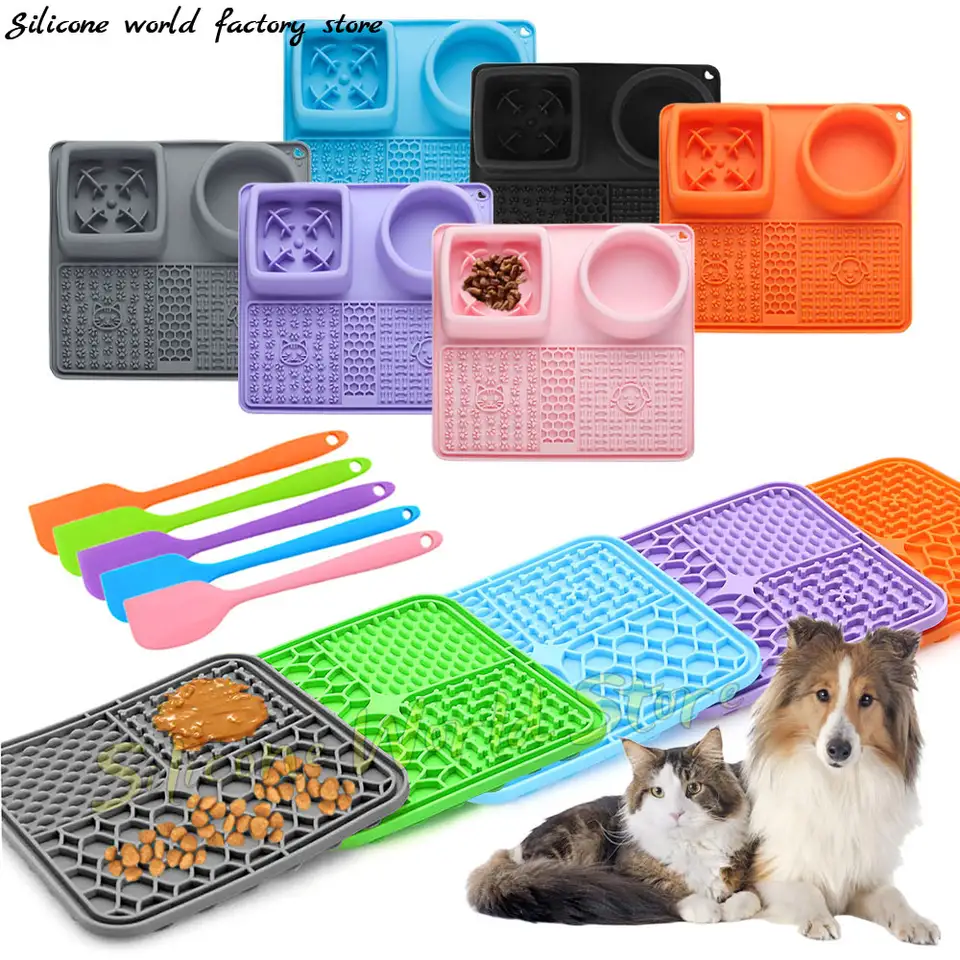
Lick mats: While simple, lick mats like the [Calming Lick Mat](/products/calming-lick-mat) engage the dog's sensory processing and trigger calming neurochemistry. Freeze them for extended engagement (20–30 minutes vs. 5 minutes unfrozen).
Choosing the Right Difficulty
Starting too hard leads to frustration and avoidance. Starting too easy creates a dog that loses interest quickly.
Start one level below where you think your dog is. A dog that's never done a puzzle will give up on Level 2. Let them experience success first — success builds engagement.
Watch how they approach it:
- Too easy: Solved in under 2 minutes without much thought. Move up.
- Right: Works at it for 5–15 minutes, occasionally pausing, then gets it.
- Too hard: Gives up after 2–3 minutes or tries to destroy it. Drop a level.
What to Look for in a Dog Puzzle Toy
Material durability: Avoid thin plastic with a chewing dog. ABS plastic is the minimum; rubber or food-grade silicone is better for heavy chewers.
Non-slip base: Puzzle toys slide everywhere without one. Rubber feet or suction cups matter.
Dishwasher safe: You'll be putting food in this thing multiple times a day. Easy cleaning isn't optional.
Difficulty adjustability: The best puzzles can be made harder or easier depending on how you load them.
Breeds That Benefit Most
All dogs benefit from enrichment, but these breeds need it more than others:
Herding breeds (Border Collie, Australian Shepherd, Sheltie): Built to problem-solve all day. Without cognitive work, they develop neurotic behaviors — obsessive chasing, excessive barking, destructive chewing.
Hunting breeds (Beagle, Bloodhound, Weimaraner): High drive, need outlets for scent and search behaviors. Snuffle mats and nose work games are especially good matches.
Working breeds (German Shepherd, Doberman, Rottweiler): Need both physical and mental challenge. A puzzle toy pre-walk reduces leash reactivity significantly.
Any anxious dog: Puzzle toys provide focus that interrupts anxiety cycles. A dog working on a puzzle can't simultaneously be spiraling about an upcoming thunderstorm.
The Enrichment Rotation
Dogs get bored of the same puzzle. Rotate between 3–4 different enrichment formats to keep engagement high:
- Meal 1: Slow feeder bowl (daily)
- Meal 2: Lick mat (daily, alternating toppings)
- Mid-afternoon: Puzzle feeder toy (rotate between 2–3 puzzles)
- Pre-bedtime: Frozen Kong or stuffed toy
This rotation gives dogs variety while making enrichment a sustainable part of their routine rather than a once-a-week novelty.

Ready to Try It?
Everything mentioned in this article ships free. Use code WELCOME10 for 10% off your first order.
Shop PawHaven →