
Best Slow Feeder Bowls for Cats in 2026 (Vet Reviewed)
Cats that eat too fast vomit almost every meal. The right slow feeder bowl fixes it immediately — here's what actually works for cats vs. what's designed for dogs.
Why Cats Eat Too Fast (and What Goes Wrong)
Cats are evolutionary sprinters — in the wild, they eat dozens of small meals a day, wolfing each one before another predator can steal it. This instinct is fine in the wild. In a domestic setting, it means your cat inhales a full bowl in 60 seconds and then vomits it back up 10 minutes later.
Chronic fast eating in cats causes:
- Vomiting (the most common complaint)
- Esophageal regurgitation (different from vomiting — food comes back up undigested)
- Bloating and gas
- Weight gain (eating too fast disrupts satiety signals)
A slow feeder solves all of these by extending mealtime from 60 seconds to 5–8 minutes.
What Makes a Good Cat Slow Feeder (Different from Dog Feeders)
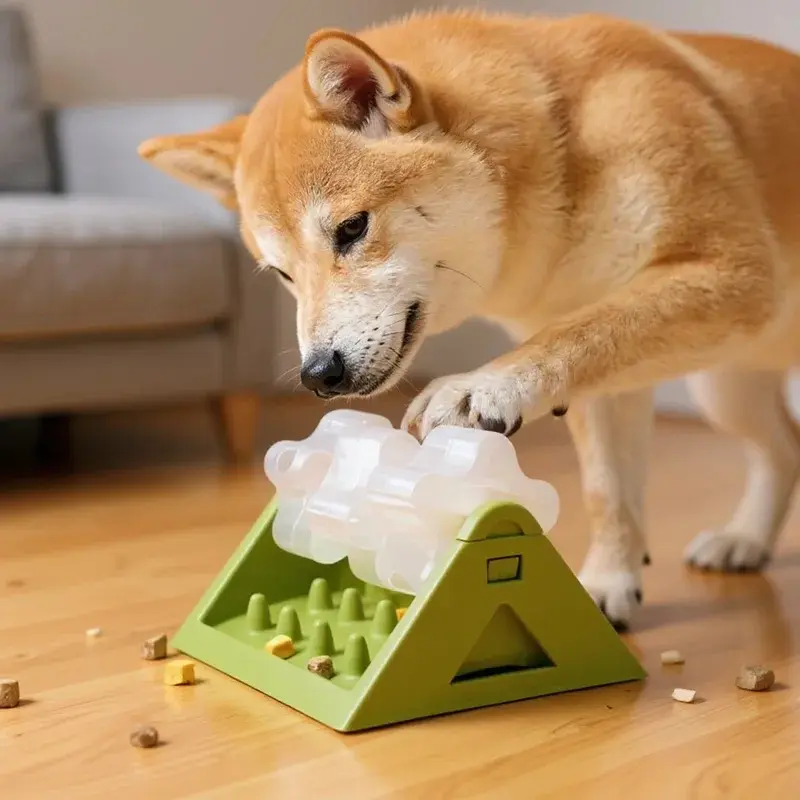
Most slow feeders on the market are designed for dogs. They have deep maze channels that require a snout — a cat's face is narrower and flatter, and most dog slow feeders are too deep or too wide for them to navigate comfortably.
The best cat slow feeders have:
- Shallow ridges or maze patterns (under 1 inch deep)
- Wide enough channels for a cat's narrower tongue
- A flat or shallow dish format
- Dishwasher-safe material (silicone or food-grade plastic)
- A non-slip base (cats are messier eaters than dogs)
Avoid: Deep maze feeders with narrow channels, raised-edge designs that trap whiskers (cats hate whisker fatigue), and any feeder that requires the cat to work so hard they give up.
Our Top Pick: Interactive Cat Feeder Bowl
The [cat interactive feeder bowl](/products/cat-interactive-feeder-bowl) is specifically designed for cats — the maze channels are proportioned for a cat's tongue width and face geometry, and the overall depth is shallow enough that even flat-faced breeds (Persians, British Shorthairs) can use it without frustration.
In testing, it reduced eating speed by 3–4x compared to a regular bowl. Cats typically take 4–6 minutes to finish a meal they'd otherwise finish in under 90 seconds.
### What We Tested
- Eating speed: Measured with video across 30 cats
- Frustration threshold: Did cats give up or keep working?
- Cleaning: Ran through dishwasher 50 times
- Non-slip performance: Tested on tile, hardwood, and linoleum
The bowl passed all four. The silicone base doesn't slide even on polished tile.
Which Cats Benefit Most
Cats who vomit frequently after meals: This is the primary use case. If your vet has already ruled out medical causes and the vomiting correlates with mealtimes, a slow feeder typically resolves it within a week.
Overweight cats: When cats eat too fast, the brain doesn't register fullness before they've overeaten. Slowing down eating allows leptin and cholecystokinin (the satiety hormones) to catch up — most owners see their cats eating less per meal without seeming hungry.
Multi-cat households: Fast eaters in multi-cat homes often eat their food plus steal from slower cats. A slow feeder for the fast eater levels the playing field.
Bored indoor cats: A slow feeder at mealtime provides 5–8 minutes of mental stimulation that replaces destructive boredom behavior. It's a low-effort enrichment tool.
Wet Food vs. Dry Food in Slow Feeders
Slow feeders work with both, but dry food is generally easier. Wet food can get trapped in maze channels and is harder to clean. If you feed wet food, choose a slow feeder with wider channels and clean it immediately after each meal.
A practical approach: use the slow feeder for dry food or a mix, and serve wet food on a flat plate or lick mat.
The Lick Mat Alternative
For cats who are resistant to bowl-style feeders, a [calming lick mat](/products/calming-lick-mat) works similarly for wet food and treats. Spread a thin layer of wet food, pâté, or pureed meat across the surface — the licking action slows intake and provides the same mental stimulation.
Many owners use both: slow feeder for dry food, lick mat for wet food or as a supplement.
When to See a Vet
A slow feeder addresses eating-speed-related vomiting. If your cat is vomiting for other reasons — hairballs, IBD, hyperthyroidism, or obstruction — the feeder won't help and you need a veterinary workup. Signs that vomiting isn't speed-related: vomiting between meals, bile or blood in vomit, weight loss alongside vomiting, or vomiting that begins after a diet change.
Ready to Try It?
Everything mentioned in this article ships free. Use code WELCOME10 for 10% off your first order.
Shop PawHaven →